
Self-Service Booking for Groupon Merchants
Designing merchant onboarding for Groupon’s Booking Tool
Overview
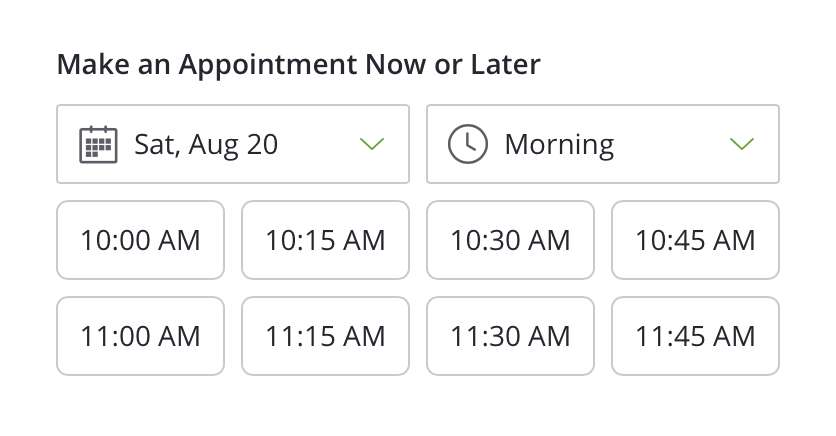
Groupon offers merchants a free Booking Tool that allows customers to schedule appointments when purchasing or redeeming a deal.
As Groupon worked toward becoming a fully bookable marketplace, increasing the number of deals that supported booking became a key business priority. In this project, I designed a self-service onboarding experience that allowed merchants to configure booking for their deals without assistance from Groupon sales representatives.
Problem
Deals that support booking performed significantly better on the platform.
Internal data showed:
Bookable deals converted at higher rates
Customers who redeemed deals through booking returned 20% more frequently
However, onboarding merchants to the Booking Tool required a manual process handled by Groupon sales representatives. Each deal required 48–75 hours of rep time to configure using an internal legacy system used by support teams.
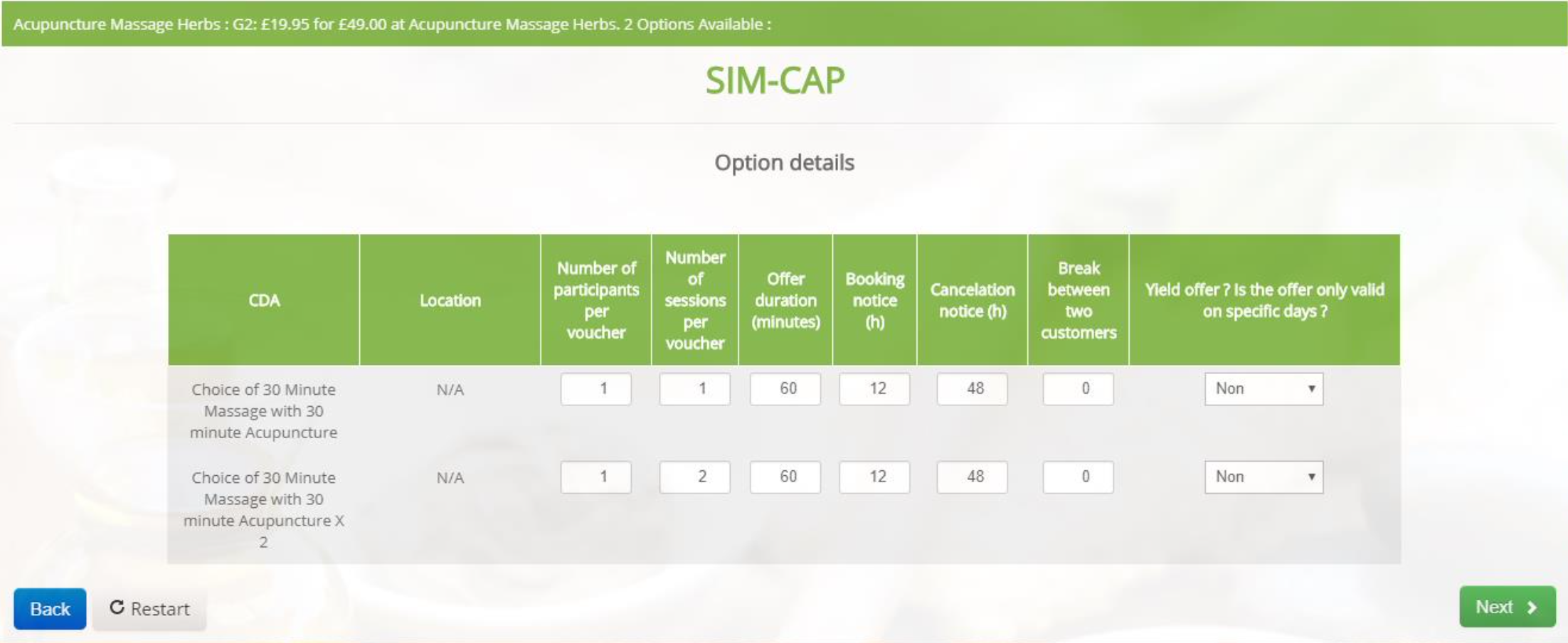
This process severely limited Groupon’s ability to scale the supply of bookable deals.
Opportunity
The team hypothesized that a self-service onboarding experience could dramatically increase Booking Tool adoption.
By allowing merchants to configure booking themselves, Groupon could:
Rapidly increase the supply of bookable deals
Reduce operational overhead for sales teams
Give merchants greater control over how Groupon customers accessed their services
However, designing this experience introduced several challenges.
Design Challenges
Several constraints shaped the scope of the project.
The MVP focused on beauty and wellness businesses, with future expansion planned for other verticals.
The experience needed to support a wide range of merchant configurations, including multiple locations and multiple deal options.
Merchants vary widely in technical comfort, requiring strong guidance throughout the onboarding flow.
The UX research team had limited availability during early stages of the project.
To guide design decisions, our team aligned on several key principles.
Guiding principles
Scalability
Build a foundation that could support future verticals and additional booking products.
Control
Allow merchants to configure booking settings that matched their operational needs.
Guidance
Provide clear explanations and structured steps to help merchants make informed decisions.
Convenience
Enable merchants to complete onboarding independently without contacting Groupon support.
Exploration
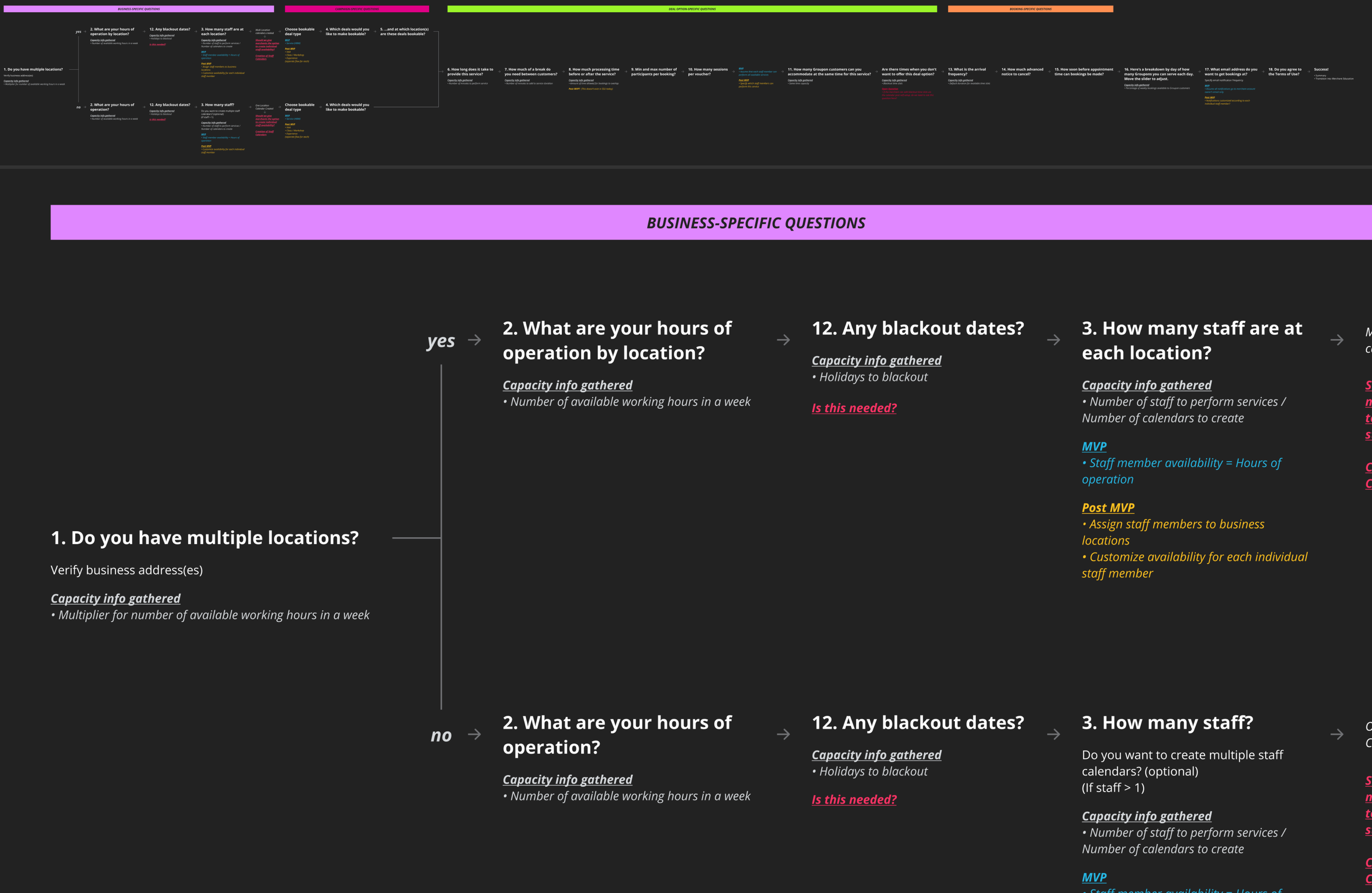
My first step was understanding the information required to configure booking for a deal. I facilitated several mapping sessions with product managers, engineers, and internal support teams to document:
Booking configuration requirements
Merchant data dependencies
Operational workflows used by support representatives
These exercises helped identify the structure of the onboarding flow and potential opportunities for future improvements.
I also reviewed a competitive landscape analysis conducted by the design team, which evaluated industry-leading booking platforms.
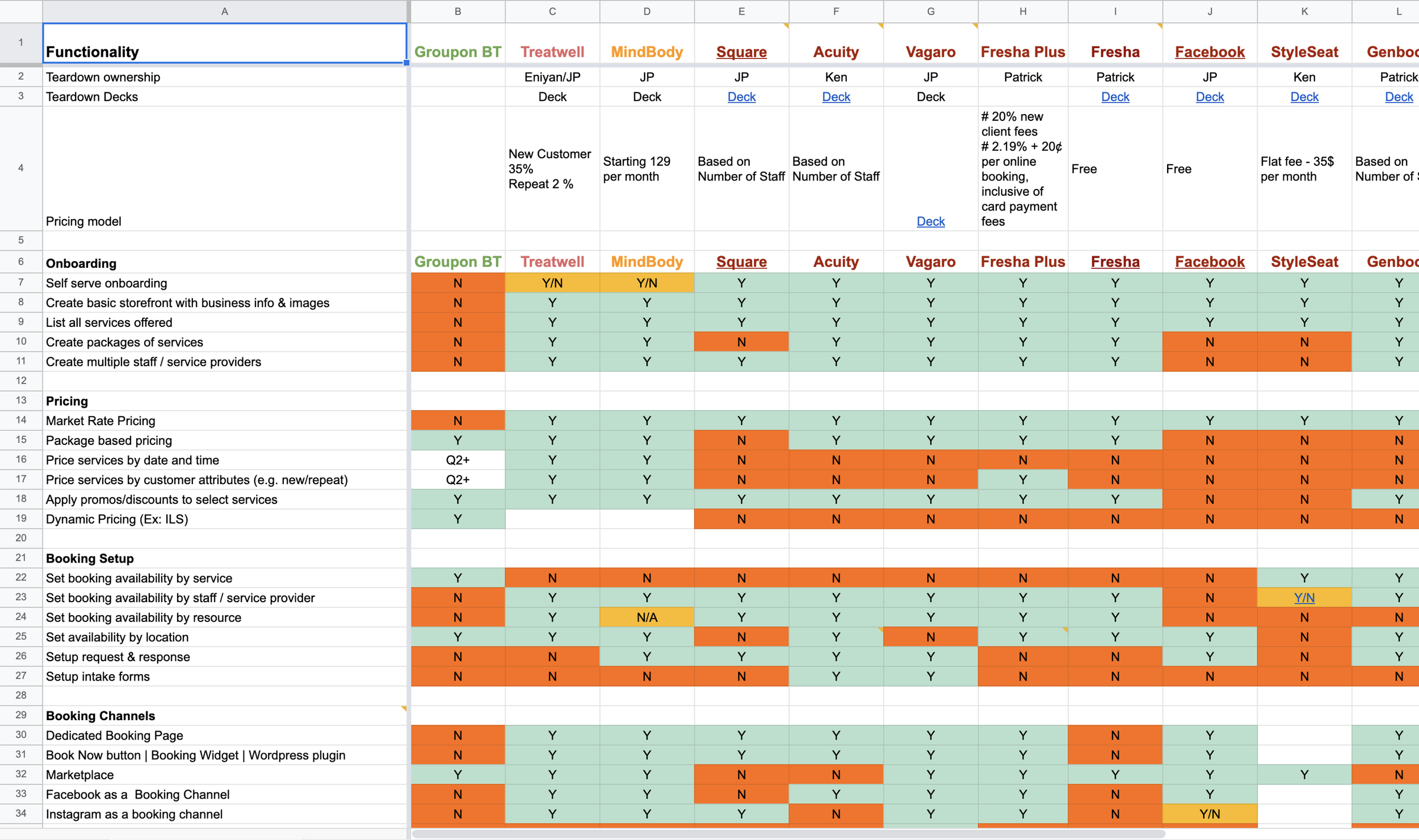
Competitive landscape feature breakdown.
While these platforms provided useful inspiration, Groupon’s product posed a unique design challenge. Most competitors built their systems around booking from the start, while Groupon’s Booking Tool was layered onto an existing voucher marketplace model.
Research
Due to limited research team availability early in the project, my team conducted moderated merchant interviews later in the design process. We interviewed seven merchants in the beauty and wellness vertical who accepted bookings but were not currently using Groupon’s Booking Tool. The goal was to determine whether merchants could successfully complete onboarding independently and identify any areas of confusion. I contributed to the research plan, participated in interviews, and synthesized feedback with the team.
Two key themes emerged:
Merchants valued control over availability settings
Less tech-savvy merchants appreciated clear structure and guidance
These insights influenced the final onboarding framework.
Design Decisions
Several important design decisions shaped the final experience.
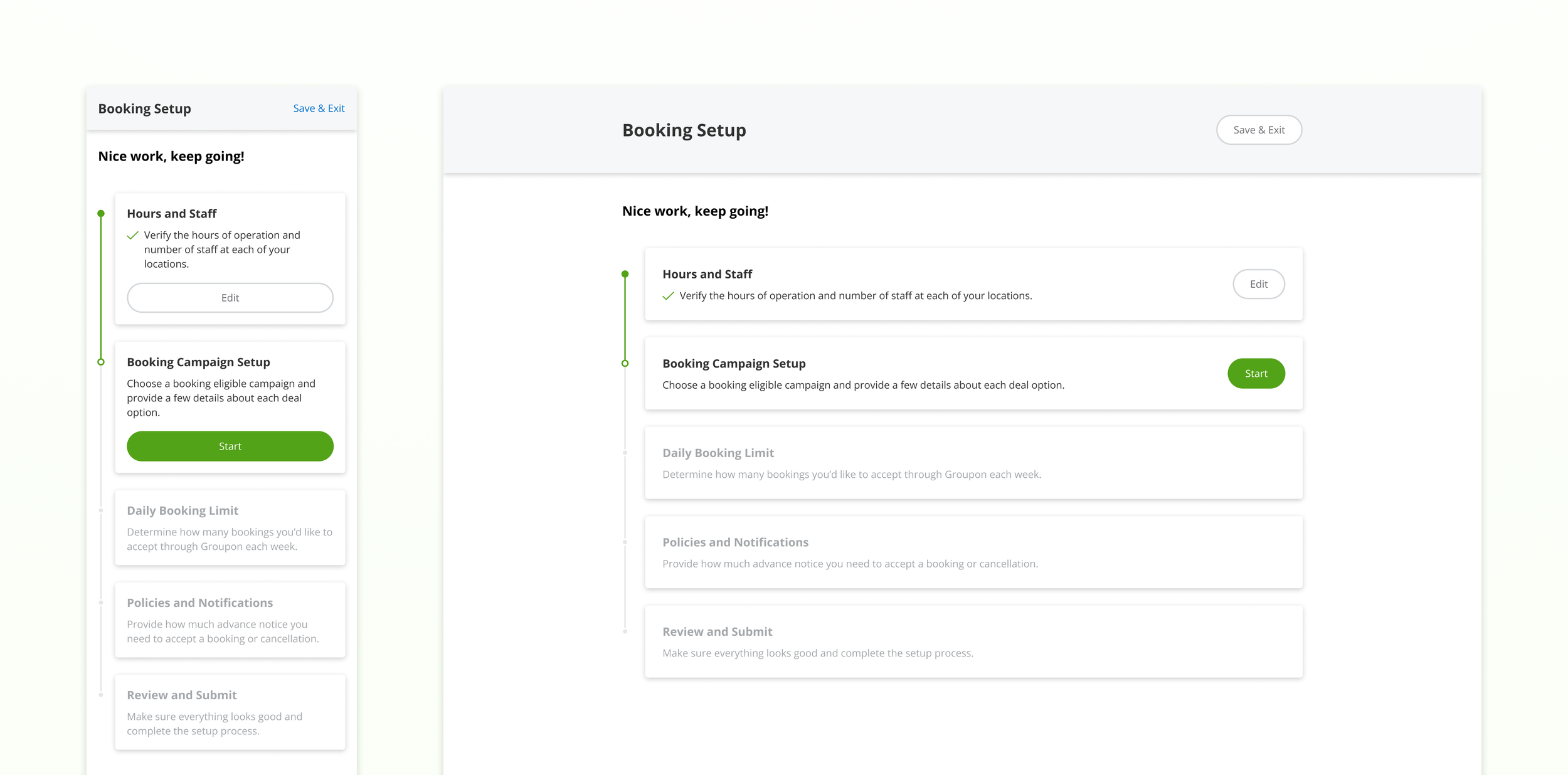
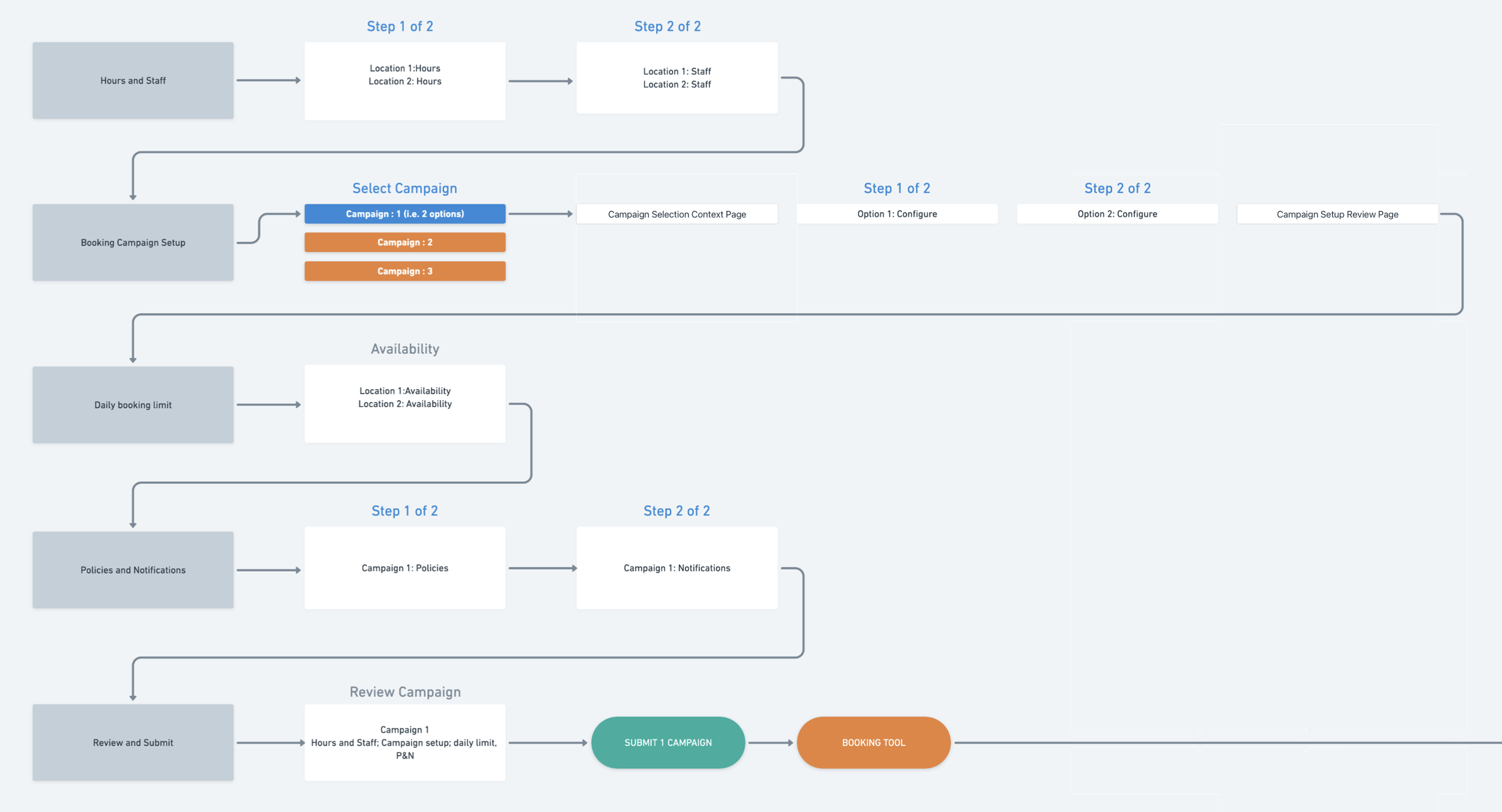
Decision 1: Replace linear onboarding with a hub-and-spoke model
Early prototypes used a traditional linear step-by-step onboarding flow. However, feedback from internal teams suggested merchants often think about booking configuration as a set of separate operational decisions rather than a strict sequence.
To better match this mental model, I redesigned the experience using a hub-and-spoke structure. The hub page introduced each configuration section and allowed merchants to complete them in a flexible order. Research participants reported that returning to the hub between sections helped them feel oriented throughout the process.
Decision 2: Provide granular control over booking availability
Merchants wanted to maintain control over when Groupon customers could book services.
Within the Campaign Setup section, merchants could configure availability for each deal option individually. This allowed merchants to limit Groupon bookings during peak hours reserved for full-price customers. Research participants consistently cited this level of control as one of the most valuable aspects of the experience.
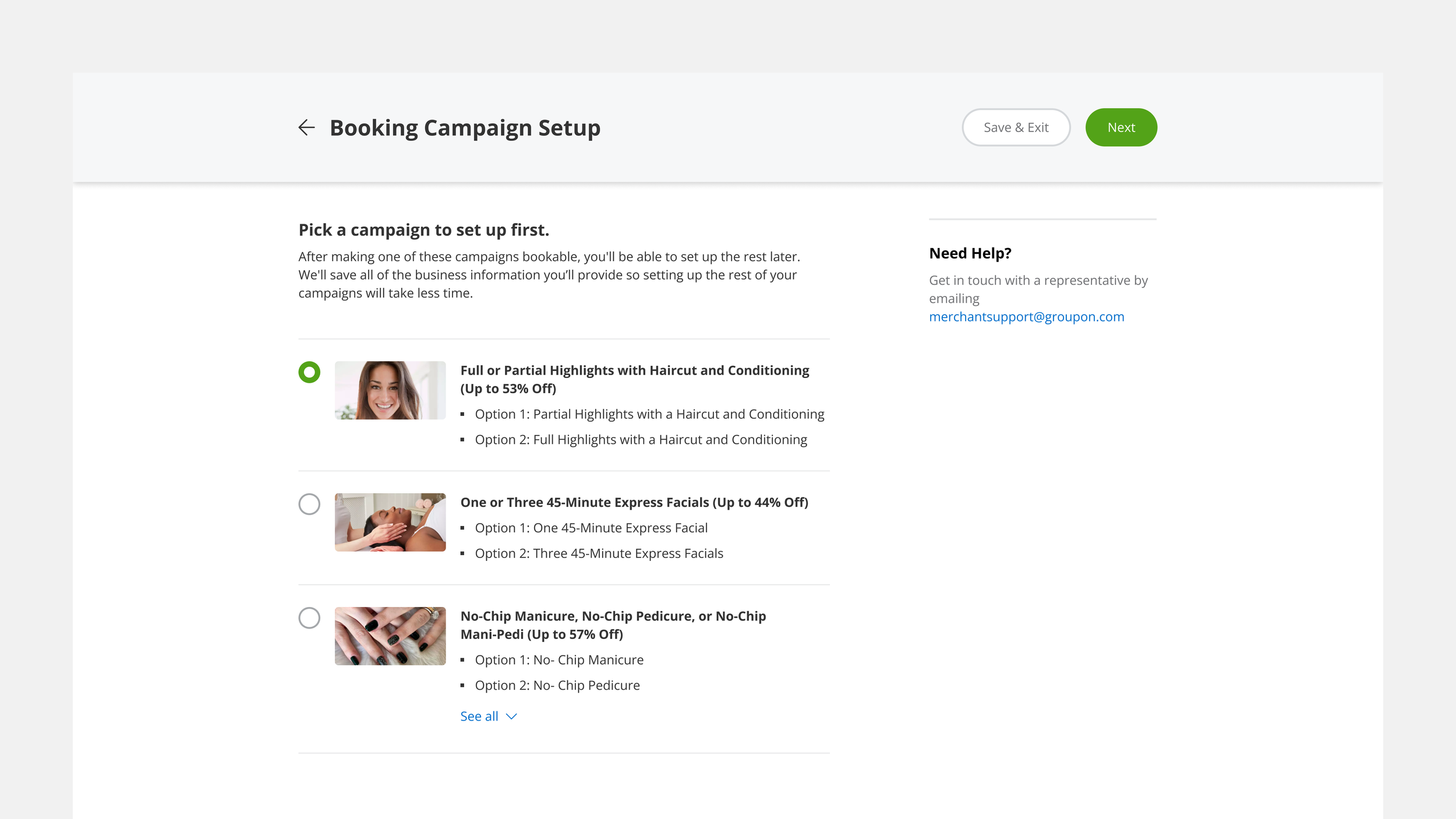
Campaign selection screen.
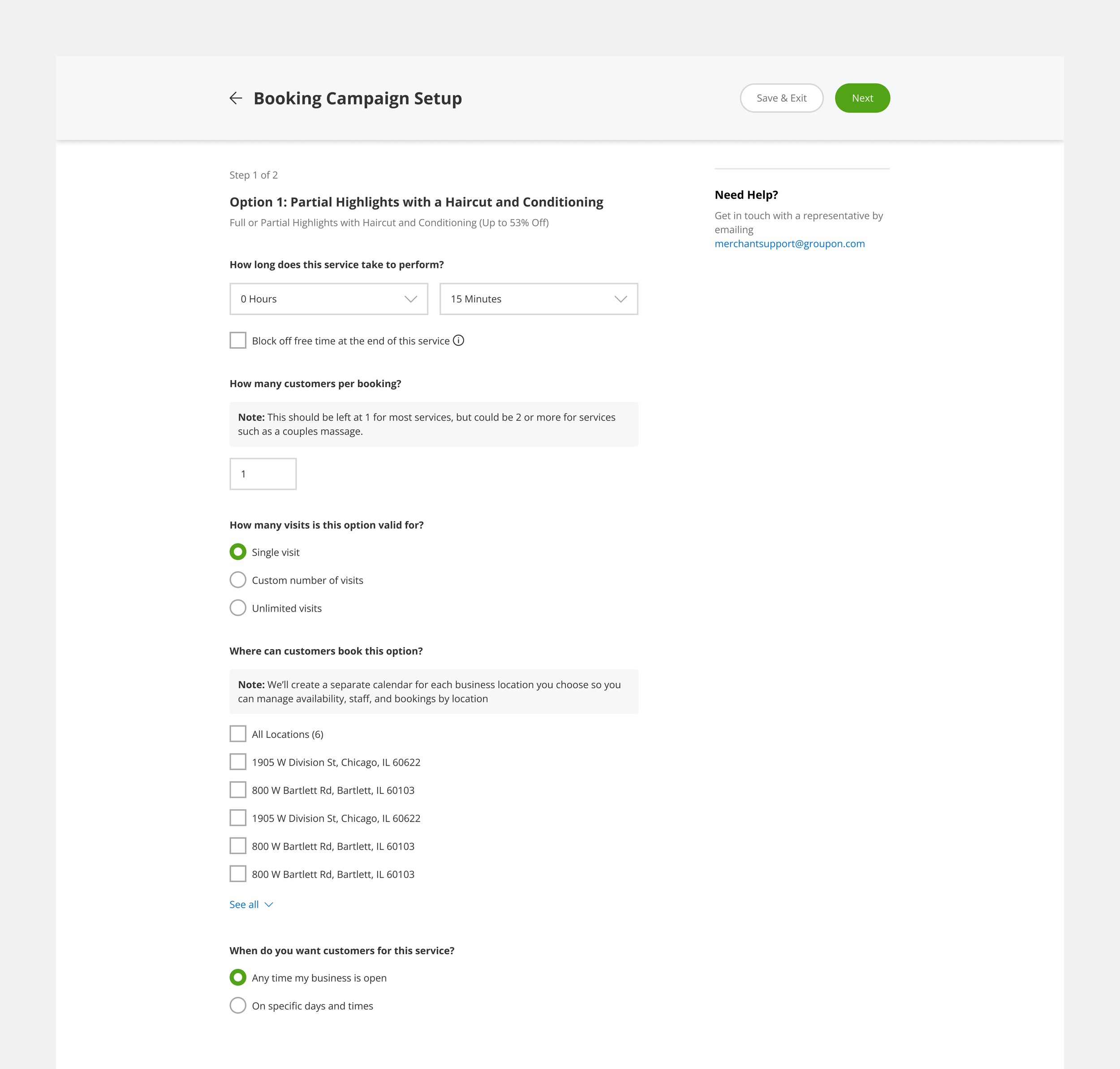
Deal option setup screen, where merchants can customize bookable settings for each service offered as part of their deal.
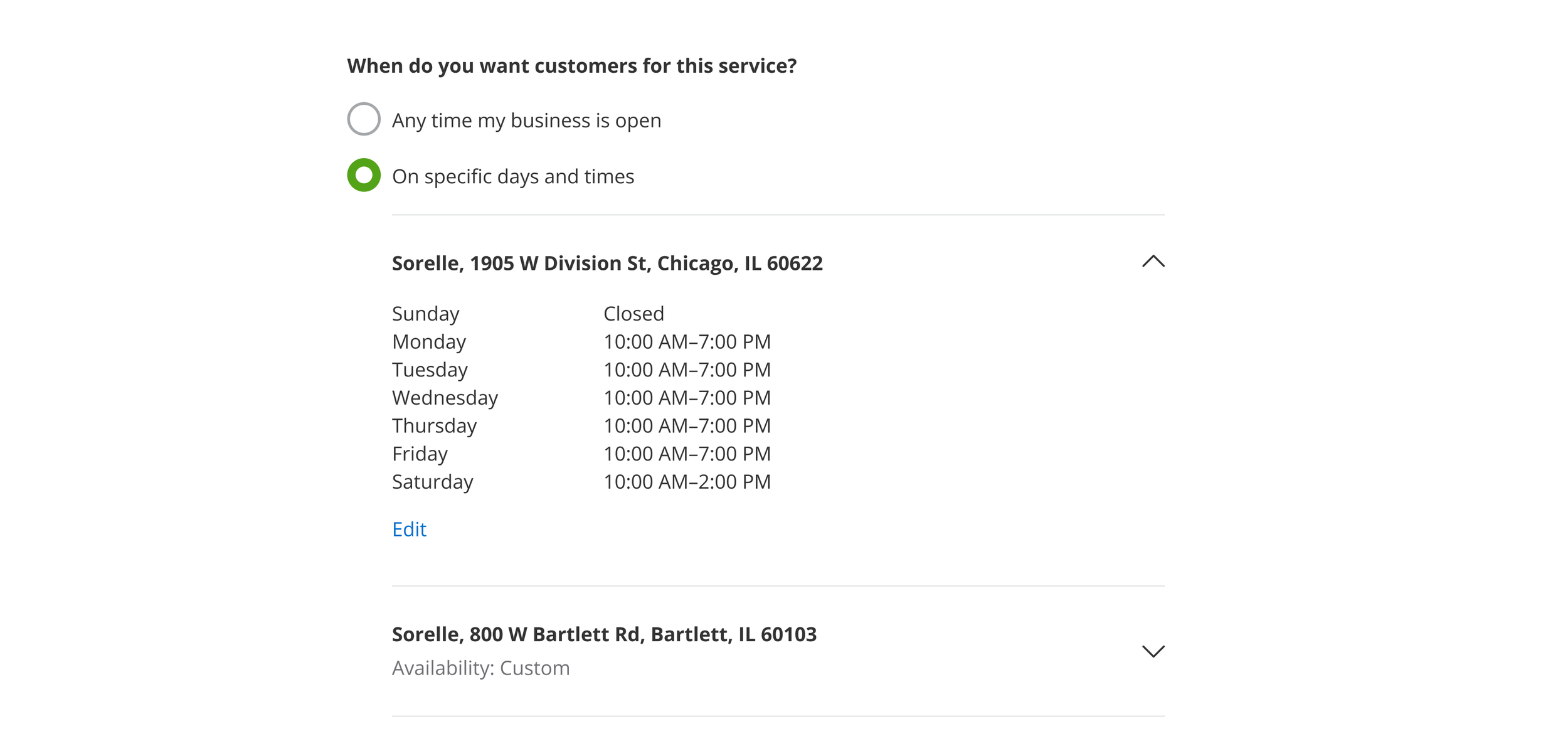
Service availability settings.
Decision 3: Help merchants manage customer volume
Another major concern for merchants was avoiding operational overload.
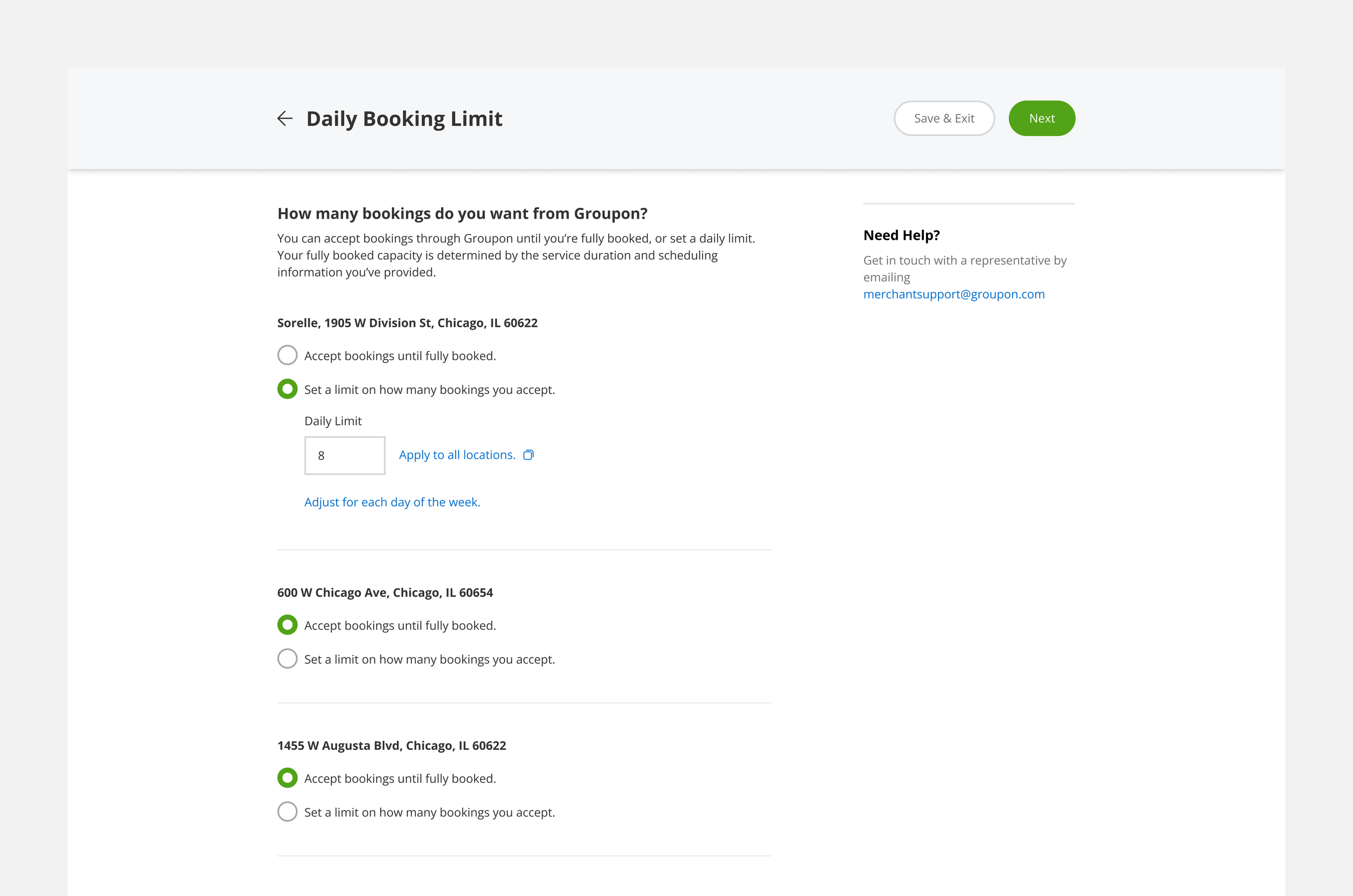
The Daily Booking Limit section allowed merchants to set limits on the number of Groupon customers they would serve each day. This gave merchants confidence that onboarding to Booking Tool would not disrupt their existing business operations.
Final Experience
The final onboarding flow consisted of several configuration sections accessible from a central hub:
Business hours and staff capacity
Booking campaign configuration
Service availability settings
Daily booking limits
Cancellation policies and notification preferences
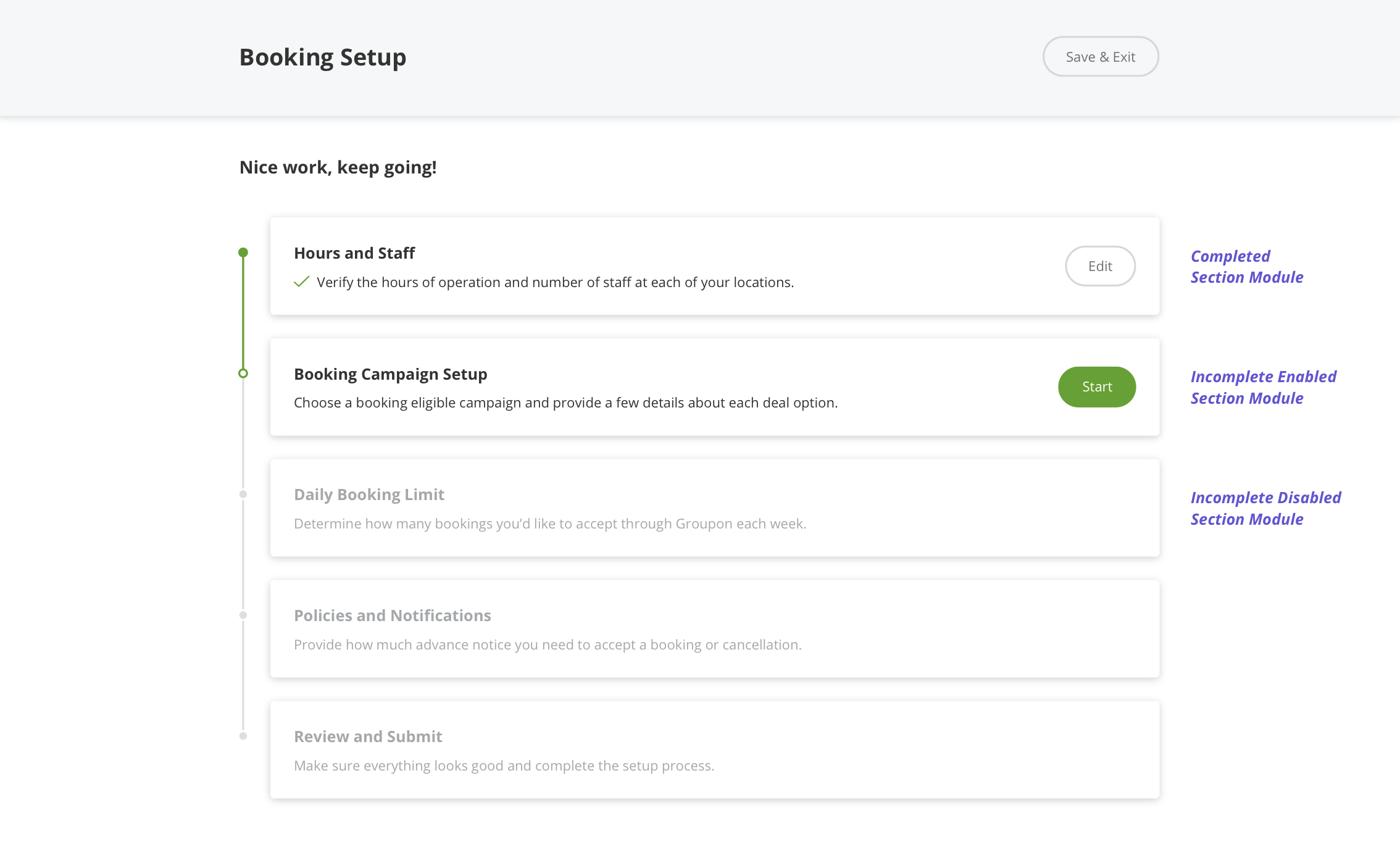
Merchants could complete each section independently and return to the hub to track progress. Once onboarding was complete, their deals became bookable directly through Groupon.
Outcome
The self-service onboarding flow significantly reduced the operational effort required to enable booking for deals. By shifting configuration responsibility from internal sales teams to merchants, the system created a scalable foundation for expanding Groupon’s supply of bookable experiences. The framework also informed onboarding patterns used by other teams within the merchant experience.
Reflection
Looking back, several improvements could further strengthen the experience.
Better capacity modeling
The MVP relied on a simplified staff-to-service mapping, assuming that each staff member could perform all services offered by the merchant. Future iterations could integrate more detailed staff profiles to better reflect real-world scheduling constraints.
Editing booking settings post-setup
Allowing merchants to easily edit their onboarding settings directly within the Booking Tool would reduce friction when business needs change.